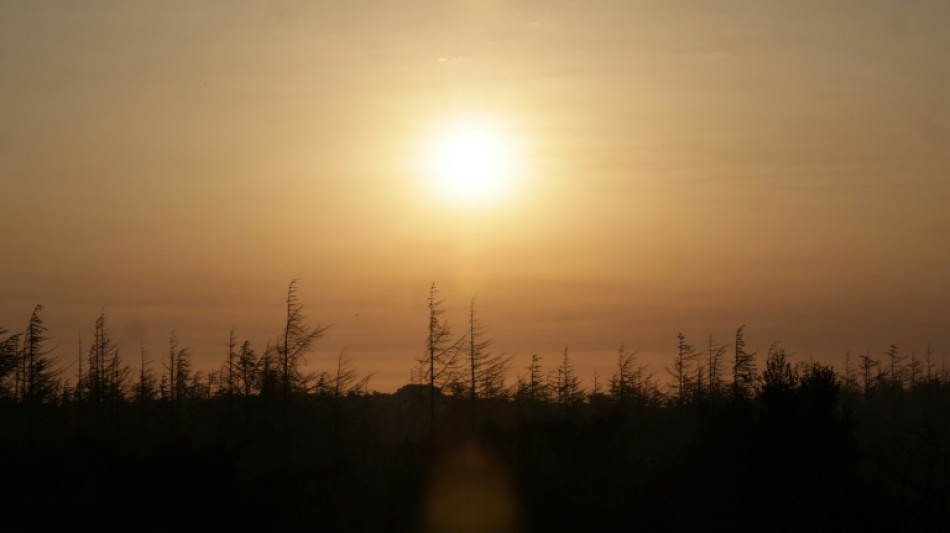
UN climate panel head wants swift end to deadlock over key scientific report / Photo: Valentine CHAPUIS - AFP/File

The world's top climate scientists will reconvene at the earliest opportunity, the panel's chair said on Monday, after member states failed to agree when to release its crucial new findings on global heating.
The IPCC, a United Nations body, is the global authority on climate science.
Its reports bring together the latest knowledge on climate change, its causes, potential impacts and options for responding.
They are the key reference point for international agreements on how to tackle the climate crisis, are used by governments to develop national climate policies and have been quoted in international court rulings.
The IPCC suspended its latest negotiations late on Friday after a week of tough talks in the Ethiopian capital, Addis Ababa.
Many of the IPCC's nearly 200 member countries want its next major report out in time for a crucial United Nations climate summit in 2028.
That summit is due to take stock of the world's progress so far in cutting planet-heating greenhouse gas emissions and is a key decision-making point.
But some IPCC members -- including Saudi Arabia, India and China -- have argued that more time is needed to incorporate science and data from developing nations and have said the new report should be delayed until 2029.
"Reaching consensus on the schedule for our upcoming IPCC reports is vital," IPCC chair Jim Skea said on Monday.
"Our reports... help communicate the scale of climate risks and the urgency of mitigation, adaptation and international cooperation."
- Best available evidence -
Skea said that because the Addis Ababa meeting ran past the closing time, many countries -- notably smaller nations most vulnerable to climate change -- had to leave.
He said it was essential for all countries in the IPCC to be able fully to participate in the negotiations to ensure the body's assessments on the state of the planet were "robust, representative and responsive to the needs of all countries".
The IPCC, set up in 1988, knits together assessments from thousands of climate scientists who work voluntarily to compile its mammoth reports.
They are normally released every five to seven years. The most recent came out in 2021.
Skea said the meeting in Addis Ababa had agreed on many issues, including on artificial intelligence.
But member governments had not yet reached consensus on a timeline for completing the next report "and the IPCC budget that will support our work".
"I will reconvene this plenary session at the earliest opportunity so the panel can effectively conclude its business," he said.
Some 117 scientists working on the new report signed an open letter saying: "Our message to governments and to the world is simple: we will keep working."
The world's response to "the urgency of the climate crisis" must be guided by the best available evidence, said the letter, seen by AFP.
"An assessment that arrives after the decisions it is meant to inform cannot serve its purpose," it insisted.
"The second Global Stocktake in 2028 is such a decision point -- and the world should not have to face it without the IPCC's latest assessment."
J.Jackson--PI