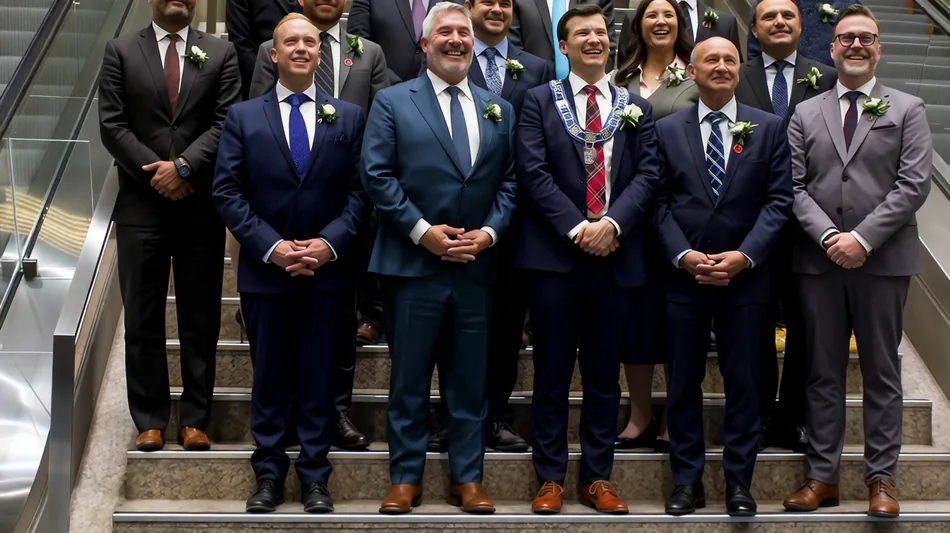
Walcott: No Champions on Calgary city council

A critical review of Calgary City Council’s first year argues that while Mayor Jeromy Farkas has consistently advocated for infrastructure funding, other council members have failed to champion key civic priorities. The assessment points to rising transit fares, abandoned light rail projects, and proposed cuts to arts programs as evidence of a lack of leadership on major urban issues.
To achieve significant progress on Calgary City Council, the role requires councillors willing to advocate for causes despite inevitable challenges. According to a recent assessment of the council’s first year, Mayor Jeromy Farkas stands out as the primary figure fulfilling this role, particularly through his consistent messaging regarding infrastructure costs.
Farkas has maintained that Calgarians must prepare to pay for world-class infrastructure, emphasizing that the financial obligation for such amenities has come due. This clear stance has prompted other council members to spend considerable time in media outlets signaling which expenditures they intend to cut to mitigate tax increases.
While councillors frequently publicize what they oppose, the assessment questions what they actively support. It argues that there are currently no clear champions on the council for an inclusive and accessible public transit system, a vibrant arts and culture scene, poverty reduction, or municipal independence from provincial interference.
The review contends that the council has spent its first year increasing barriers to public transit rather than lowering them. Instead of advocating for investments in Calgary Transit, the council approved an adult fare increase to $4. The current budget proposal aims to raise the ticket price to $4.60 over the coming years. By the end of the council’s term, fares are projected to rise by 15 percent.
This trend follows a motion led by Councillors Yule and Pantazopoulos to eliminate the Free Fare Zone, which is scheduled for consideration in the first quarter of next year. Consequently, residents face rising costs while the free fare initiative remains under threat.
For residents relying on the City of Calgary’s Fair Entry program for affordable transit tickets, Councillors Ward, Johnston, and Chabot have signaled intentions to end or reduce support. The assessment notes that these cuts would impact individuals seeking affordable access for employment, recreation, and daily life in the city.
Regarding major infrastructure, the review highlights a setback for the Greenline North light rail transit (LRT) project. Councillors Kelly and Yule have reportedly abandoned preparatory work for the line in favor of short-term improvements. Yule, who had advocated for the Greenline North for a decade, declared the project dead due to fatigue with the effort.
When presented with Calgary Transit’s plans to expand northward—including bus lanes and LRT preparation—Yule and Kelly led the charge to abandon LRT prep work. The assessment argues that while this path offers short-term service improvements, it increases the future cost of the North LRT, making its realization less likely.
Councillor Andre Chabot has also proposed cutting transit funding to expand road budgets, characterizing transit investments as "throwing good money after bad." He has suggested that transit should be self-sustaining and that tax dollars should not subsidize public transportation. The assessment contrasts this with the fact that roads are 100 percent subsidized by tax dollars.
Chabot’s concerns regarding the "capital implications of operational increases" relate to the need for more buses to support faster, expanded service. He advocates directing that capital toward roads instead. The review describes this strategy as ironic, noting that an efficient, affordable transit system reduces pressure on roads, whereas an underfunded system accelerates road deterioration.
The assessment also addresses Calgary’s arts and culture infrastructure, citing world-class facilities such as the Werklund Centre, the JR Shaw Centre for Arts and Culture at the Glenbow Museum, the National Music Centre, and Contemporary Calgary. These projects have attracted hundreds of millions in private funding from citizens who view arts and culture as essential to the city’s future.
The review states that arts and culture infrastructure generates more revenue for the city than any investment made in them, describing this as a positive return on investment for fiscal conservatives. However, Councillor McLean has suggested cutting funding to Calgary Arts Development and other partners like the Calgary Library because he is unsure how many people use library books.
Creative Calgary has launched a campaign urging residents to support arts institutions against claims that they are non-essential. The organization notes that eliminating the entire Calgary Arts Development Authority grant would save Calgarians only $1.93 per month.
The assessment concludes that a world-class city requires champions for arts, transit, housing, and poverty reduction. With the budget passage imminent, residents will see the council’s vision for the city’s future.
E.Perez--PI