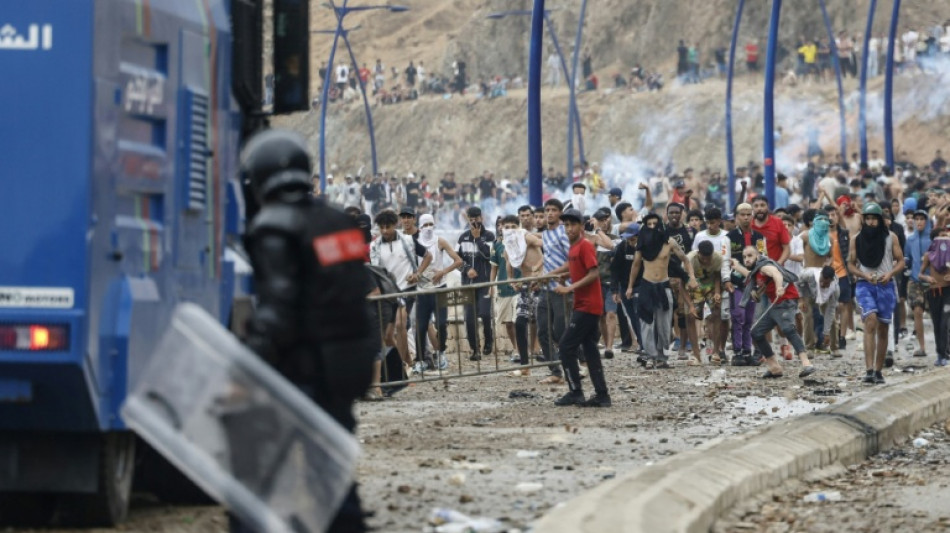
Spain declassifies intelligence reports into Ceuta migrant rush / Photo: Abdel Majid BZIOUAT - AFP

The Spanish government on Tuesday declassified intelligence reports about July's migrant surge into Ceuta in a bid to quell doubts about what it knew beforehand and Morocco's potential role.
More than 70,000 migrants streamed into Spain's small north African territory from neighbouring Morocco on July 30 and 31, raising questions about how the unprecedented and deadly rush could have happened.
The leftist government has maintained it received no prior warning of the scale of the incident and says no "solid proof" exists to conclude Morocco planned it.
But doubts have swirled over the possible role of Rabat, which claims sovereignty over Ceuta and Spain's other north African territory of Melilla.
A Spanish police report leaked last week flagged "total permissiveness" by Moroccan security forces during the rush, saying their numbers at the Ceuta border were lower than usual and that some actively facilitated the crossings.
Spain's top criminal court opened an investigation into the events on Monday and largely based its ruling on the report, saying there was "undeniable facilitation" from Morocco.
The conservative and far-right opposition have lambasted the government for its handling of the crisis, accusing it of ignoring warnings and of subservience to Morocco, which maintains delicate relations with Madrid.
Cabinet approved on Tuesday the release of "around 40 documents" which would be made public on Wednesday, government spokeswoman Elma Saiz told a press conference.
"We are taking another step forward in our commitment to transparency and the public's right to know all the information," said Saiz, who however refused to preview the contents of the documents.
Most of the migrants who entered Ceuta have returned to Morocco, but thousands have remained in often dire living conditions, increasing tensions in the city as residents demand their expulsion.
The government minister responsible for relations with Spain's regions, Angel Victor Torres, announced on Tuesday that 3,400 reception places had been set up for the migrants, many of whom have slept rough in Ceuta for weeks.
The aim was to reach 6,000 places "in the coming days", he said.
The government has sought to speed up the return of the remaining migrants, but it must first identify them and decide whether they are entitled to asylum.
Thousands of unaccompanied children cannot be summarily deported and require special protection.
D.Parker--PI