US to push economic pressure on Iran at G20 finance talks / Photo: Kent NISHIMURA - AFP

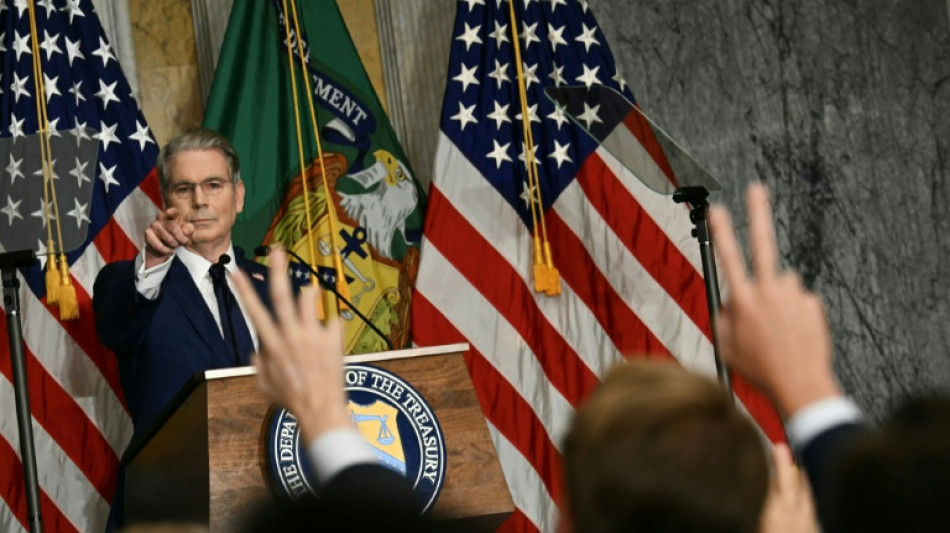
Treasury Secretary Scott Bessent will step up efforts to isolate Iran economically as he hosts G20 counterparts next week, a US official said Thursday, in a gathering clouded by war and trade tensions.
Finance ministers and central bank governors from the Group of 20 major economies are due to convene in mountainous Asheville, North Carolina, next Monday and Tuesday.
Their talks are the first of several key ministerial meetings this year, setting the stage for a G20 leaders' summit President Donald Trump will host in December in Florida.
In Asheville, US officials will stress to G20 members the importance of complying with its sanctions on Iran, as it ramps up pressure on Tehran amid war in the Middle East, a Treasury official told reporters.
The official signaled Bessent will make direct appeals to counterparts in bilateral meetings. But they stopped short of sharing who he had scheduled talks with and whether they include China.
The G20 comprises 19 nations plus the European Union and the African Union. It was established in the wake of the 1997-1998 Asian financial crisis to boost global economic and financial stability.
But South Africa has been excluded from the G20 under the US presidency this year, while Washington invited Poland to a seat at the table.
Next week, US officials will also push to address concerns like excess industrial capacity, promoting stronger economic growth and building reliable supply chains for critical resources like energy.
Although G20 talks broadened to cover issues like climate change and global health over time, analysts expect Washington to advocate a "back-to-basics" approach this year.
This means a renewed focus on debt, trade, financial stability and banking regulation, Josh Lipsky, chair of international economics at the Atlantic Council think tank, told AFP.
The upcoming gathering, however, comes as US global leadership faces a test.
Worries about US debt levels are growing, while Trump's sweeping tariffs targeting competitors -- and longtime allies like Canada -- have strained ties.
Countries are also grappling with economic fallout after US-Israel strikes on Iran from February plunged the Middle East into war, causing energy costs to surge.
Bessent has laid out plans to isolate Iran economically, widening secondary sanctions threats and warning of dire consequences for countries that fail to join the campaign.
But doing so will likely require taking on China, the main buyer of Iranian oil -- a difficult task ahead of Trump's expected September summit with Chinese leader Xi Jinping.
With a US-Canada trade war and Bessent warning of sanctions hitting other members around the table, "it just creates the broader feeling of, could this group fracture?" Lipsky said.
"I think that's really the challenge for this meeting," he said.
M.Johnson--PI