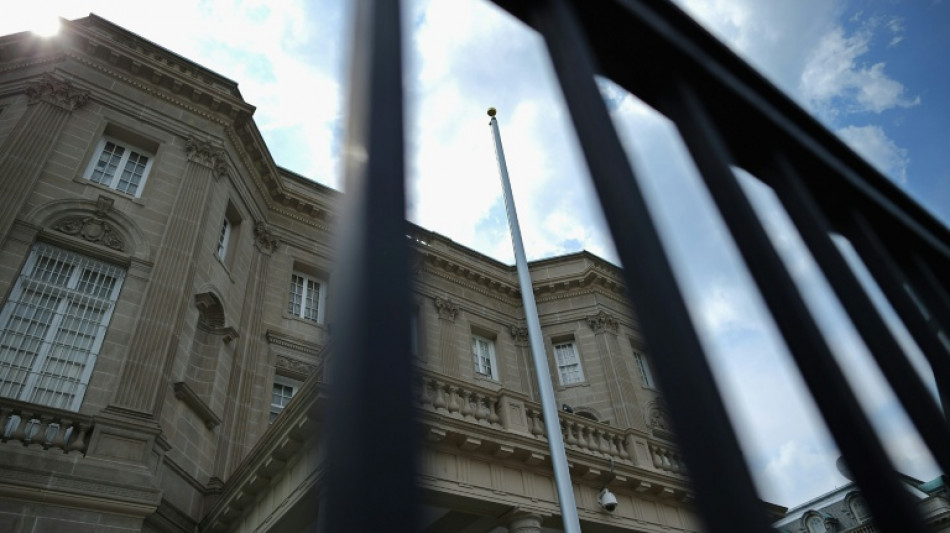
US accuses Cuba of sweeping spy campaign / Photo: CHIP SOMODEVILLA - GETTY IMAGES NORTH AMERICA/AFP
The United States on Monday accused Cuban spies of infiltrating the highest levels of government in Washington, as President Donald Trump pushes to end communist rule of the island while reviving anti-leftist rhetoric at home.
The US State Department released a report containing little new information, but adding pressure on Cuba amid a campaign that has seen Washington impose an effective oil embargo and new sanctions while indicting its former president, Raul Castro.
It comes as Trump leads a revival of Cold War-style rhetoric portraying left-wing US political figures as a communist "menace" that must be cut out "like a cancer." The United States will vote in midterm elections later this year.
The State Department report alleged that Cuba "has infiltrated the highest reaches of the US government, recruited and cultivated generations of American activists (and) backed an unprecedented wave of left-wing terrorism on American soil."
While the allegations represent an escalation in US-Cuba tensions, espionage between the two countries has long been known.
Since the Cold War, the US has made high-profile arrests of Cuban intelligence officers, including the "Cuban Five" who were convicted of infiltrating civil society groups in Florida in the 1990s, and Ana Montes, who spied from a senior position within the Defense Intelligence Agency.
In more recent cases, State Department intelligence analyst Walter Kendall Myers and former US ambassador to Bolivia Victor Manuel Rocha pled guilty in separate cases to spying for the communist country.
Meanwhile, the US Central Intelligence Agency (CIA) and Cuban exiles tried to assassinate late Cuban president and revolutionary leader Fidel Castro more than 600 times, his ex-intelligence chief, Fabian Escalante, once estimated.
- US threatens takeover of Cuba -
The report released Monday made sweeping -- if unsubstantiated -- allegations that Cuba has cultivated relationships with leftist groups across the world and in the US to drive "overriding resentment and fundamental hatred of the United States and the broader West."
The State Department said that the communist country had influenced "a disproportionate share of America’s most famous and influential extremist movements," in an effort to "turn America against itself."
The report makes the latest downturn in the long-fraught relationship.
In 2015, then president Barack Obama attempted a rapprochement with the Cuban government, hoping a more diplomatic approach would yield better relations after a half-century of hostility.
Trump quickly restored a hardline stance in 2017, and -- on returning to office in 2025 -- reinstated Cuba as a state sponsor of terrorism on his first day in office.
Last year, the US military overthrew Venezuelan president Nicolas Maduro -- a long-time supporter of the Cuban government who provided subsidized energy to the island.
Since then, the United States has threatened sanctions on countries supplying oil to the island -- effectively imposing an energy embargo that has contributed to multiple full-scale blackouts across the country.
Trump has repeatedly signaled that the Cuban government could be next after Venezuela to fall to US pressure, and said in June that Washington would be "taking over" the Caribbean island, about 90 miles (145 km) from Florida, "almost immediately."
N.Nelson--PI