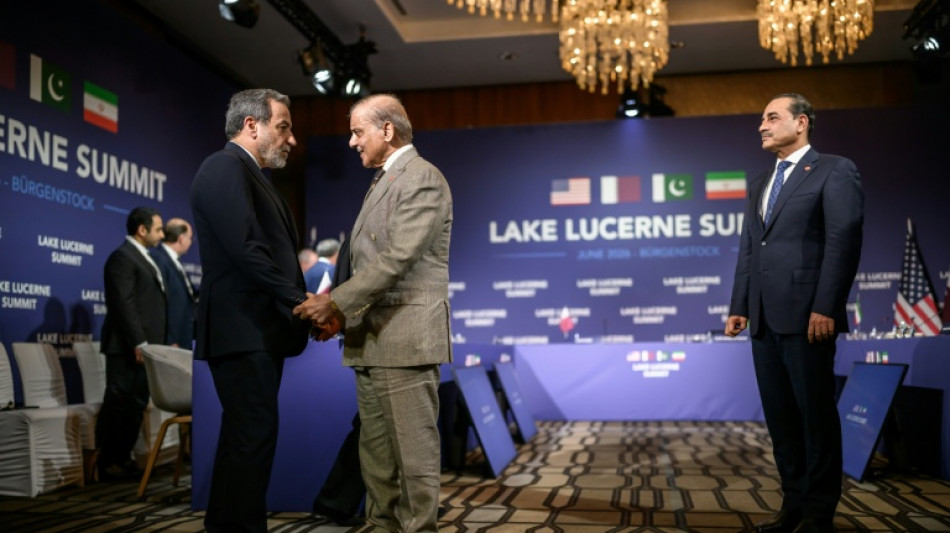
Iran says won't allow UN inspectors at bombed nuclear sites / Photo: Fabrice COFFRINI - POOL/AFP
Iran said Tuesday that the UN's nuclear watchdog will not be able to inspect key nuclear sites bombed by the US and Israel last year, as the first round of talks to end the Middle East war wrapped up in Switzerland.
Tehran and Washington have signed a memorandum of understanding to end a war that sowed chaos across the Middle East and rattled the global economy, embarking on a 60-day period to settle broader issues including Iran's nuclear programme and sanctions relief.
Diplomacy on that final deal ramped up on Tuesday, with Iran's leader heading to mediator Pakistan, US Secretary of State Marco Rubio setting off on a tour of Gulf allies, and Lebanon and Israel due for direct talks in Washington.
But Iran denied the claim of US Vice President JD Vance that Tehran had agreed to invite International Atomic Energy Agency (IAEA) inspectors back after Iran blocked them from nuclear sites struck by its arch foes in a 12-day war last year.
"We have not had a meeting with the director general of the IAEA, nor do we have any plans for the agency to inspect Iran's nuclear facilities damaged by the US and Zionist military aggression," foreign ministry spokesman Esmaeil Baqaei told a press briefing attended by AFP.
When the US joined Israel's war with Iran in mid-2025, it bombed nuclear facilities at Fordow, Natanz and Isfahan, including with powerful bunker-busting bombs dropped from B-2 stealth bombers.
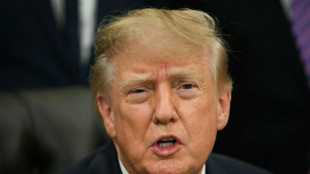
The extent of the damage remains unknown despite US President Donald Trump claiming they were "obliterated".
Iran's UN ambassador Ali Bahreini also told reporters Tuesday "there hasn't been such a decision" to allow IAEA inspectors into the country.
It came as Tehran's top negotiator said Tuesday that the strategic Strait of Hormuz wouldn't return to the days of free passage before the war, despite both sides agreeing Monday to set up communication lines to keep the vital trade route open.
"The Strait of Hormuz will never return to its pre-war conditions and will be administered by the Islamic Republic of Iran, in accordance with international law," Ghalibaf said on his return from the talks, according to IRNA.
Yet marine traffic through the waterway reached a record level on Monday since the war began, with at least 35 commodity carriers transiting it, according to maritime tracking firm Kpler.
- Diplomatic whirlwind -
After talks wrapped up in Switzerland, Rubio was to visit the United Arab Emirates, Kuwait and Bahrain -- all attacked by Iran during the war -- to discuss the deal with Tehran, the Hormuz strait and regional security.
The comments of Rubio, an ardent Iran hawk, will be closely watched as he has largely remained out of the spotlight, with Vice President JD Vance taking a lead role in defending the deal.
Iranian President Masoud Pezeshkian, meanwhile, was visiting key mediator Pakistan on Tuesday, state media reported.
The round of negotiations launched this weekend at Switzerland's luxury Burgenstock resort raised hopes for a lasting settlement of the conflict and pushed down oil prices.
Pakistan's Foreign Minister Ishaq Dar told Saudi-based broadcaster Al-Arabiya on Tuesday that "we are very hopeful that things will progress" after the first round of talks.
Mediators Pakistan and Qatar said both sides had agreed on a "roadmap" to reach a final document for an agreement within the 60-day timeframe.
They agreed that four negotiating groups be set up on nuclear issues, sanctions and other matters, Iranian state media said on Tuesday.
The US Treasury said it had temporarily lifted sanctions on Iran to allow it to produce, sell and deliver crude and related products until mid-August.
As part of their deal, Washington agreed to release $12 billion in frozen funds to Iran, Iranian state media reported.
Vance said Iranian assets had not yet been unfrozen and that, if they were, they would be used to buy US goods such as soybeans and would not fund terrorism.
But Bahreini said Iran would be the "only country" to decide what to do with its assets if they are released.
- Lebanon war -
On the Lebanon front, a fifth round of negotiations between Lebanese and Israeli officials is scheduled to begin in Washington on Tuesday.
Lebanese President Joseph Aoun and Vance discussed a so-called "de-confliction mechanism" for Lebanon on Monday to prevent spiralling Israel-Hezbollah violence.
Lebanese authorities are seeking the withdrawal of Israeli troops from the country and to separate the negotiations from the US-Iran deal.
Fighting between Israel and Hezbollah, which drew Lebanon into the Middle East war on March 2 with rocket fire at Israel in support of its backer Iran, has repeatedly threatened to derail peace efforts.
The goal of the Washington talks will be "to end the cycle of violence for good," and "advance a comprehensive peace and security agreement between the two countries," a US State Department official told AFP on Monday.
Despite a reduction in hostilities in Lebanon following the declaration of a new ceasefire, one man was killed and two others wounded on Tuesday when Israeli soldiers fired "machineguns in their direction while they were standing near an excavator" unblocking a road in the south, state media reported.
burs-jfx/smw
L.Stewart--PI