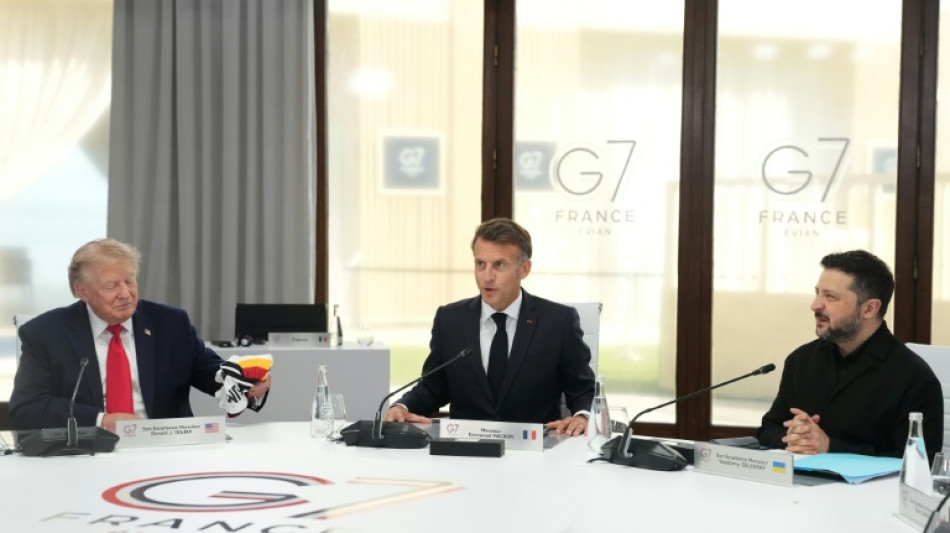
G7 finds 'unity' on upping Russia pressure to end Ukraine war / Photo: Thibault Camus - POOL/AFP
G7 leaders agreed on Tuesday to intensify pressure on Russia to end more than four years of war against Ukraine, with US President Donald Trump saying Moscow should "make a deal" and indicating Washington could re-impose waived sanctions.
Ukrainian President Volodymyr Zelensky joined the summit at the French resort of Evian, with both increased sanctions and the possibility of a face-to-face meeting between the Ukrainian leader and Russian President Vladimir Putin in discussion.
Analysts say Ukraine is increasingly holding up well on the battlefield but its cities are still the target of deadly Russian attacks in a conflict that has now lasted longer than World War I.
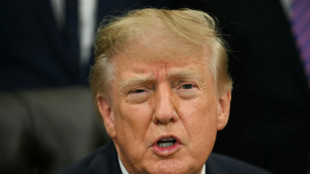
The summit of the G7 group of world powers notably brought Zelensky together with Trump, who has sought to reach out to Putin but also showed signs of losing patience with Moscow.
"Russia should make a deal" to end the war against Ukraine, Trump said after meeting Zelensky.
He pointed to the high casualties on both sides in the conflict, the deadliest on European soil since World War II.
"The whole thing is ridiculous. So, yeah, I'm going to do whatever I can," Trump added.
He said the US will soon be able to reimpose sanctions against Russian oil after Washington imposed and then extended a sanctions waiver for Russian oil cargoes already at sea, troubling European allies.
"Soon we will be able to do that as the oil is now flowing" through the Strait of Hormuz after the deal with Iran to end the Middle East war, Trump said.
- 'Things are changing' -
British Prime Minister Keir Starmer said all the G7 powers were "in the same place" and there was "a real sense of unity in the G7, a sort of shared consensus that things are changing".
"Ukraine has shown that it's able not just to defend itself but to take territory back and inflict quite significant losses on Russia," he told Times Radio.
Starmer said Britain was imposing a raft of new sanctions against Russia, including on tankers that transport LNG, in a bid to pressure Moscow into halting the war against Ukraine.
A French diplomatic source said after the talks "leaders decided today to increase the pressure on Russia through sanctions on gas and oil".
The summit's host, President Emmanuel Macron, has invited Zelensky to stay until the end of the three-day summit on Wednesday so that he can meet Trump and the other G7 leaders.
Zelensky said in a message to Ukrainian reporters after his talks that "above all Putin does not want to end this, but he must be forced... first and foremost, through sanctions".
Zelensky brandished photos of the latest wave of Russian strikes, which on Monday killed at least 11 people and sparked a fire at a landmark Kyiv cathedral.
He has said Putin had rejected an offer of a meeting at the G7 but said he had also suggested to Trump that he could meet the Russian leader in the United States.
"The aim remains to encourage a face-to-face meeting between Zelensky and Putin, but it is up to Moscow to give concrete signals of a willingness for peace that have been totally lacking until now," said an Italian diplomatic source, who asked not to be named.
- 'No boy scout' -
Iran remains a key topic at the summit, with allies eager to question Trump over his deal with the Islamic republic to end the Middle East war.
Trump said the United States was under "no obligation" to invest in Iran after the deal, adding that its main focus was that Iran would not acquire a nuclear weapon and that "all hell" would "rain down" on the country if it did.
After Iran's former supreme leader Ali Khamenei was killed on the first day of the war on February 28, Trump described the surviving leadership in Tehran as "very rational people" who were "nice to deal with" and "not radicalised".
Sharaa "is very good with Hezbollah, does not like them", Trump said, adding that the Syrian leader -- an ex-jihadist -- is "no boy scout".
M.Rodriguez--PI