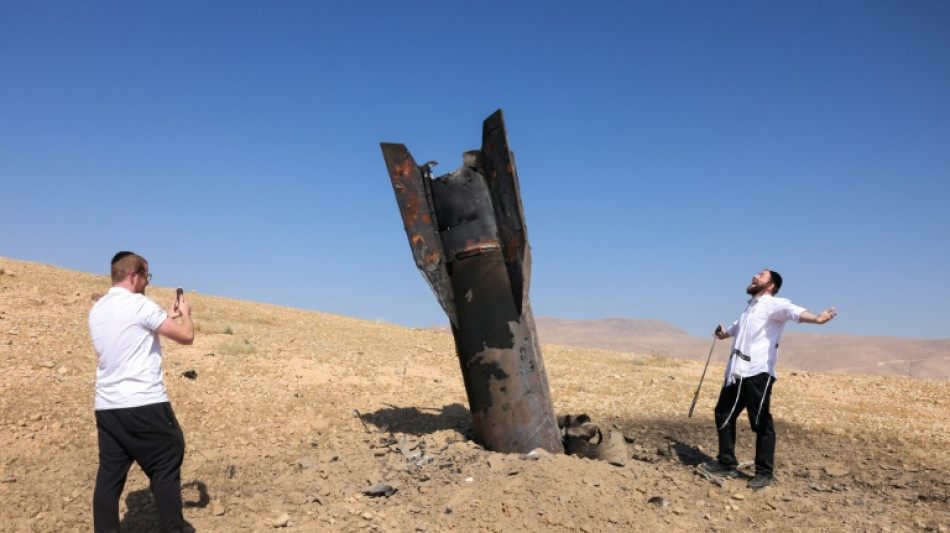
Iran, Israel say hostilities on hold after first attacks since truce / Photo: AHMAD GHARABLI - AFP

Iran and Israel said on Monday that hostilities between them had halted, after the two countries exchanged strikes that threatened to reignite the Middle East war.
Israeli Prime Minister Benjamin Netanyahu announced that the "fire on that front is contained" hours after Tehran said it had stopped its military action against Israel.
Tehran launched missiles at Israel on Sunday over its ongoing war against Hezbollah in Lebanon, which prompted Israel to strike back, despite efforts by US President Donald Trump to dissuade Netanyahu from doing so.
That triggered another round of Iranian missiles, before Tehran announced it would cease fire.
Iran has sought for weeks to link the wider Middle East truce, in place since April 8, to Israel's war against Hezbollah, warning that attacks on Lebanon would force it to act.
It said on Monday it would attack again if Israel persisted with its strikes in Lebanon. Netanyahu warned in turn that should Iran "make the mistake of resuming attacks against us, we will respond with full force".
Earlier, Israeli Defence Minister Israel Katz insisted that the campaign in Lebanon would carry on regardless and said Israel would strike the Hezbollah-dominated southern suburbs of Beirut in retaliation for each attack on northern Israel by the militant group.
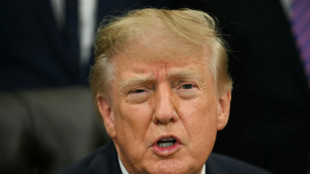
Trump, who has reportedly grown increasingly exasperated with Netanyahu, had earlier urged both sides to stop "shooting" and said that "final negotiations" towards peace would proceed "subject to ignorance or stupidity getting in its way."
The Israeli premier, though, said in a televised statement he had told Trump that "Israel has a full right to self-defence, and we are exercising it as required".
In a sign that both sides expected the ceasefire to hold, Israel's education ministry announced that schools would reopen on Tuesday, having closed because of the missile threat, while Iran's Civil Aviation Organisation said it was reopening the country's airspace.
- 'Much more severe' -
Iran fired nearly 30 missiles at Israel overnight, according to the Israeli military, and Israel responded by targeting military sites in the Islamic republic.
No casualties have been reported in either Israel or Iran after the exchange of fire.
Announcing the end of its attacks, Iran's military command said, "should acts of hostility continue, including in southern Lebanon, much more severe and crushing measures than before will follow".
But Katz said Israel's armed forces "will continue to operate in Lebanon against the terrorist organisation Hezbollah,"
"We categorically reject Iran's threats. Any Iranian attempt to link Lebanon and Iran and attack Israel will be met with great force, as happened yesterday," Katz said.
In a new attack on Monday, an Israeli strike hit a vehicle in the city of Tyre, in southern Lebanon, on Monday, Lebanese state media reported.
The Red Cross said the strike hit near their centre in the city, wounding four rescuers.
Meanwhile, the Israeli military said it had intercepted three projectiles fired from Lebanon,with an AFP journalist near the border seeing three explosions in the air.
- Calm in Tehran -
On Monday in Tehran, there was little sign of any return to war, with cafe terraces packed.
Traffic seemed lighter than usual for a weekday, suggesting that some people had stayed home and there were also many more people queueing at petrol stations.
Maryam, 41, an accountant in Tehran, described "a sense of uncertainty and confusion."
"You don't know if there's going to be a war, nor do you know if the peace agreement will last. Nothing is clear. People are frustrated," she said.
Residents of Tel Aviv meanwhile went to shelters as sirens went off.
"I hope it will be short, but you can never know. Last time we thought it will be short and then it was a month, so I don't know," said Jonathan Ariel, 30.
Oil prices surged more than five percent on worries that the war would resume, with hopes now punctured of a rapid end to the standoff that has seen shipments of the Gulf's oil and gas all but halted through the Strait of Hormuz.
- 'Still at the negotiating table' -
The strikes also came at a critical moment for diplomatic efforts to end the conflict involving mediator Pakistan.
Iranian foreign ministry spokesman Esmaeil Baqaei warned at a press conference in Tehran on Monday morning that diplomacy was continuing but could be affected by the fighting.
As he was speaking at the foreign ministry, a huge explosion shook the building, followed by repeated explosions believed to be from air defence systems, the AFP reporter said.
Pakistan Interior Minister Mohsin Naqvi visited Tehran to deliver what he said was a "special letter" to Iran's supreme leader Mojtaba Khamenei, according to Iranian state television.
He has since travelled back to Pakistan, an official Pakistani source said on Monday.
Iranian President Masoud Pezehskian posted on X that Tehran was still "at the negotiating table".
S.Scott--PI