Iran hunts crashed US jet crew, as reports say one rescued / Photo: - - AFP
Iranian and American forces were racing each other on Friday to recover the crew of the first US jet crashed in Iran since the start of the war.
US media reported American special forces had rescued one of two crew members, and official television in Iran's southwestern province of Kohgiluyeh and Boyer-Ahmad aired footage of what appeared to be wreckage of the warplane.
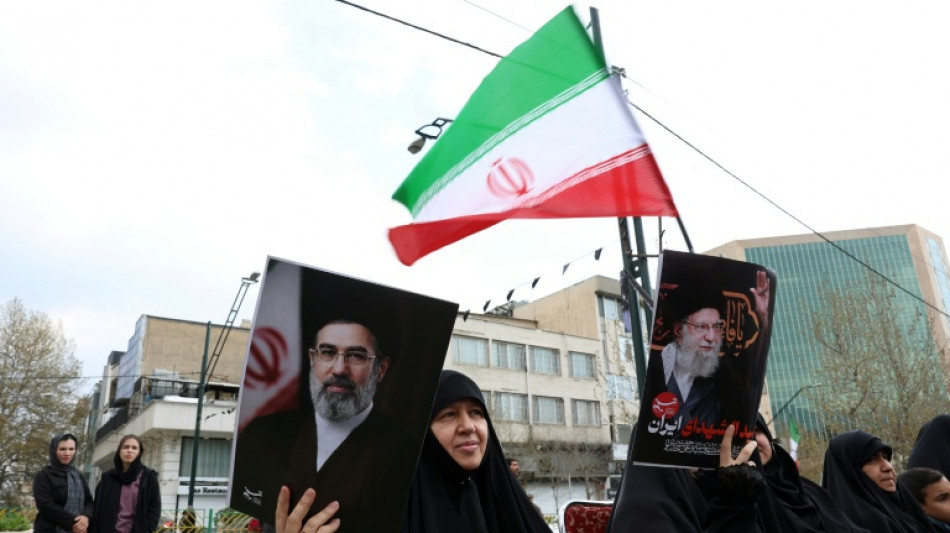
The war erupted more than a month ago with US-Israeli strikes on Iran that killed supreme leader Ali Khamenei, triggering a retaliation that spread the conflict throughout the Middle East, convulsing the global economy and impacting millions of people worldwide.
After what would be the first known loss of a jet inside Iran since Trump ordered the war, US Central Command (CENTCOM) did not immediately respond to a request for comment but White House Press Secretary Karoline Leavitt said: "The president has been briefed".
"An American hostile fighter jet in central Iranian airspace was struck and destroyed by the IRGC Aerospace Force's advanced air defence system," said a spokesperson for the Iranian military's central operational command, Khatam al-Anbiya.
"The jet was completely obliterated, and further searches are ongoing."
An Iranian television reporter on the local official channel said: "Dear and honourable people of Kohgiluyeh and Boyer-Ahmad province, if you capture the enemy pilot or pilots alive and hand them over to the police and military forces, you will receive a valuable reward and bonus."
The report of the downed jet came as fresh strikes hit Israel, Iran, Lebanon and Gulf countries -- and large blasts rocked northern Tehran, an AFP journalist said. Israel said it had launched a wave of strikes in the Iranian capital, alongside parallel attacks in Beirut.
- Blown-out windows -
Earlier, Israel's military reported a new missile salvo from Iran, activating its air defences.
Strikes by all sides have increasingly targeted economic and industrial sites, raising fears of wider disruption to global energy supplies.
In a post on his Truth Social platform, Trump said the US military "hasn't even started destroying what's left in Iran. Bridges next, then Electric Power Plants!", after US strikes damaged Iran's tallest bridge.
In the area around the bridge, in Karaj, west of Tehran, an AFP reporter saw a villa and residential buildings with blown-out windows -- but no military installations.
According to the martyrs foundation of Alborz province which includes Karaj, cited by the official IRNA agency, the attack killed 13 civilians and wounded dozens.
About 70 percent of Iran's steel production capacity has been taken out, Israel said Friday.
In Abu Dhabi, Iran's neighbour across the Gulf, metal giant Emirates Global Aluminium meanwhile said it could take up to a year before it can resume full production, after its site was damaged by Iranian strikes.
- Ex-FM urges peace deal -
Writing in the US journal Foreign Affairs, Iran's former foreign minister, Mohammad Javad Zarif, said Tehran should make a deal with Washington to end the war by offering to curb its nuclear programme and reopen the Strait of Hormuz in exchange for sanctions relief.
Iran has virtually blocked the key waterway since the war began, where one-fifth of the world's oil and natural gas normally passes.
Of the few ships that have managed to cross, most have had links to Iran, with sixty percent of commodity-bearing ships crossing the strait either coming from Iran or heading there, an AFP analysis of maritime data showed.
In the first known transit by a major European shipping group since March 1, the Maltese-flagged Kribi, belonging to the French maritime transport group CMA CGM, crossed the strait to exit the Gulf on Thursday, according to Marine Traffic data analysed by AFP.
Three other ships, including one co-owned by a Japanese company, crossed Thursday, as commodities carriers see a 94 percent drop in traffic compared to peace time, according to data from business analyists Kpler.
Iranian military spokesperson Ebrahim Zolfaghari warned that, in response to Trump's threats to attack infrastructure, Iran would increase its own attacks on energy sites in the region.
A drone attack on a refinery owned by Kuwait's national oil company on Friday sparked fires at several of its units, state media said.
Later, an Iranian attack damaged a power and desalination complex, Kuwait's water and electricity ministry said.
In Abu Dhabi, a gas complex shut after a fire broke out, following an attack that resulted in "falling debris" upon interception, the government media office said.
- Trump wants bigger defence budget -
Meanwhile, the Israeli military said Friday it had struck more than 3,500 targets across Lebanon in the month since fighting with Iran-backed Hezbollah.
It added it would attack two bridges in Lebanon's eastern Bekaa region "in order to prevent the transfer of reinforcements and military equipment".
Lebanon's health ministry said on Thursday that 1,345 people had been killed -- and 4,040 wounded -- since the start of the war, including 1,129 men, 91 women and 125 children. Among those are 53 healthcare workers.
Hezbollah has so far not announced its losses.
The United Nations Interim Force in Lebanon said a blast wounded three peacekeepers, the third such incident in a week.
A UNIFIL spokesperson said the origin of the explosion was unknown.
The war's economic impact is rippling far beyond the Middle East, as energy and oil costs surge.
At a protest in Lahore, Pakistan, over fuel price hikes, Naveed Ahmed, 39, told AFP: "The government, overnight, has dropped a 'petrol bomb' on its people."
Meanwhile, the White House on Friday sent a spending proposal to lawmakers calling for a massive hike to the US defence budget.
It remains to be seen what Congress will ultimately approve, but US media reported the $1.5 trillion budget request -- a 42 percent hike -- would be the largest year-on-year increase in Pentagon spending since World War II.
B.Cook--PI