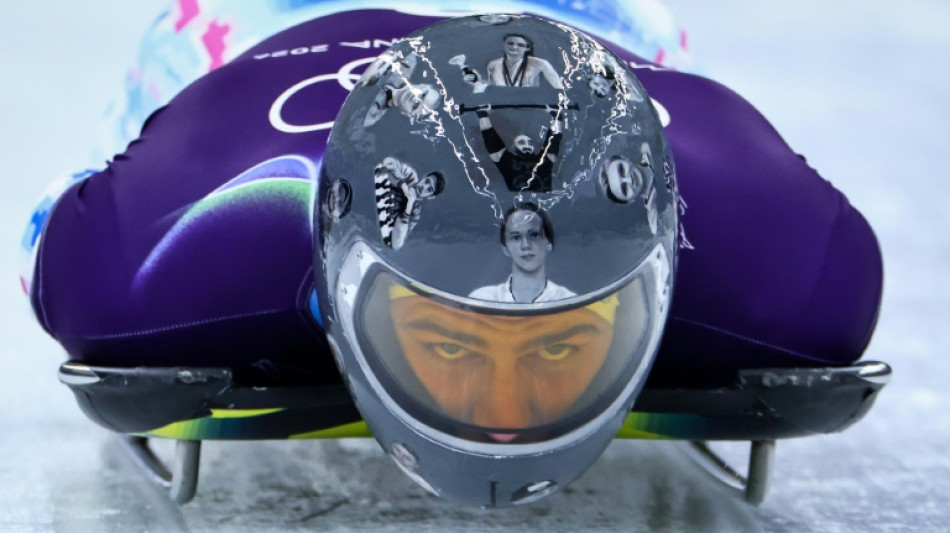
Ukrainian athlete vows to wear banned helmet at Winter Olympics / Photo: FRANCK FIFE - AFP
Ukrainian skeleton racer Vladyslav Heraskevych vowed Tuesday that he would wear a helmet that depicts victims of the war with Russia "on race day" at the Milan-Cortina Games despite a ban imposed by Olympic chiefs.
Ukrainian President Volodymyr Zelensky had defended Heraskevych's right to wear the headwear, which carries pictures of Ukrainian sportsmen and women killed since Russian forces invaded in 2022.
International Olympic Committee spokesperson Mark Adams said the helmet contravened guidelines but that the IOC would "make an exception to allow him to wear a black armband during competition to make that commemoration".
Gestures of a political nature during competition are forbidden under the Olympic charter, though athletes are permitted to express their views in press conferences and on social media.
Heraskevych later told reporters at the Cortina Sliding Centre that he had no intention of backing down and planned to wear the helmet during the men's skeleton race on Thursday.
"I used it in all trainings... I used it today, I will use it tomorrow, and I will use it on race day," he said.
The 27-year-old, who was one of Ukraine's two flagbearers in the opening ceremony in Italy, said he disagreed with the IOC's decision "because I truly believe that we didn't violate any rules".
Heraskevych added that he wanted to be part of the "Olympic family" but stressed the need to highlight the "horrible" consequences of the war following Russia's invasion.
He separately posted on Instagram: "They were killed, but their voice is so loud that the IOC is afraid of them.
"I sincerely believe that it is precisely because of their sacrifice that these Olympic Games can take place at all today," said Heraskevych.
"Even though the IOC wants to betray the memory of these athletes, I will not betray them."
The Ukrainian also pointed out that other athletes at the Games had spoken out on political issues.
The IOC's Adams earlier said he believed the proposed use of the armband was a "good compromise".
"The IOC fully understands the desire of athletes to remember friends or colleagues who have lost their lives in that conflict," he said.
"I think what we've tried to do is to address his desires with compassion and understanding."
- 'Glory to the heroes' -
Zelensky had thanked Heraskevych "for reminding the world of the price of our struggle".
"This truth cannot be inconvenient, inappropriate or called a 'political demonstration at a sporting event'. It is a reminder to the entire world of what modern Russia is," the president added.
Ukrainian Sports Minister Matviy Bidnyi told AFP this month that Russia has killed "more than 650 athletes and coaches" since it invaded Ukraine, according to the latest data.
Following the invasion, the IOC banned Russia from Olympic competition. A handful of Russian competitors are competing at the Milan-Cortina Games but as neutral athletes.
Football's governing body UEFA found itself confronted with a similar situation before the men's 2020 European football championship, which were played in 2021 due to the coronavirus pandemic.
After a protest from Russia, UEFA banned Ukraine's jerseys, which carried the message "Glory to the heroes".
It did though allow a modified jersey featuring a map of Crimea, the Ukrainian region which Russia annexed in 2014.
At Euro 2024 Ukrainian supporters honoured their war dead. At a group game with Belgium they displayed photographs of 182 football-loving soldiers killed in the war.
T.Reed--PI