Russia hits Ukraine with hypersonic missile after rejecting peacekeeping plan / Photo: Serhii Okunev - AFP

Russia hit Ukraine with its hypersonic Oreshnik missile overnight after rejecting the latest post-war peacekeeping plan, as part of a massive attack that set apartment blocks ablaze and killed at least four people in the capital Kyiv.
Ukraine and its Western allies, scrambling to bring an end to the war as it approaches the four-year mark, agreed this week that Europe would deploy troops after any ceasefire.
But Moscow, which says it launched its February 2022 invasion in part to prevent an expansion of the NATO defence treaty, has repeatedly rejected the idea of any Western forces stationed in Ukraine.
Such troops would be "considered legitimate military targets", Russian foreign ministry spokeswoman Maria Zakharova warned on Thursday, branding Ukraine and its American and European allies an "axis of war".
As diplomats wrangle for a breakthrough in what has been Europe's deadliest conflict since World War II, Russia has continued to press forward with its assault, bombarding Ukraine daily.
Russia's defence ministry said it had used the Oreshnik hypersonic missile on "strategic targets" overnight, saying the attacks were in response to a December drone strike on a resident of Russia's leader Vladimir Putin. Ukraine has denied it was behind that attack.
Moscow did not provide any other details on the attack, but Ukrainian authorities said an "infrastructure facility" had been struck near the western city of Lviv by a ballistic missile travelling at hypersonic speed.
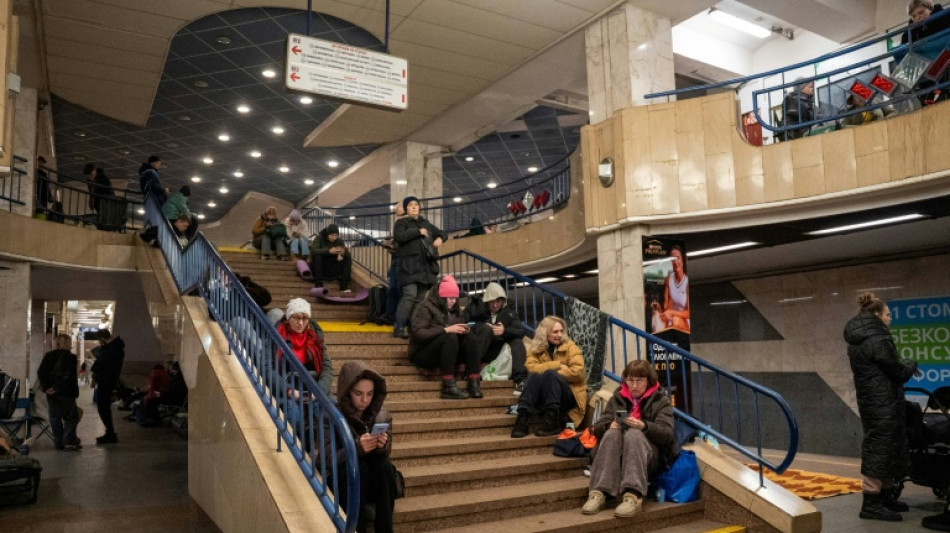
In Kyiv, drone strikes across the city killed four people and wounded at least 24 others, including emergency rescuers, police said.
At a residential building on the city's left bank, a medic was killed while responding to a strike as the site was hit a second time.
Some neighbourhoods were plunged into darkness during what Mayor Vitali Klitschko described as a "massive enemy missile attack".
Across the border in Russia's Belgorod, the governor said more than half a million people were without power or heating after a Ukrainian attack targeted the region's utilities.
Nearly 200,000 people were also cut off from water supplies, Vyacheslav Gladkov added.
Ukraine's military put the entire country on missile alert early Friday after confirming Russian bombers were airborne.
In the western city of Lviv, the Ukrainian Air Force said a ballistic missile, travelling at about 13,000 kilometres (8,000 miles) per hour, struck "infrastructure facilities" just before midnight.
The regional military administration said afterwards that radiation levels were within normal range.
Russia used an Oreshnik with a conventional warhead to strike the city of Dnipro in central Ukraine in late 2024.
- ' Quite far' from any deal -
Russia's latest barrage came after the US Embassy in Kyiv warned on Thursday that a "potentially significant air attack" could occur any time within the next several days.
Ukrainian President Volodymyr Zelensky had echoed the rare warning in his evening address.
Ukraine was still scrambling to restore heating and water to hundreds of thousands of households after strikes targeted energy facilities in Dnipropetrovsk and Zaporizhzhia regions.
"This is truly a national level emergency," Borys Filatov, mayor of Dnipropetrovsk's capital Dnipro, said as families were left without power in the frigid depths of winter.
While Zelensky has said an agreement between Kyiv and Washington for US security guarantees was "essentially ready for finalisation", German Chancellor Friedrich Merz acknowledged a ceasefire deal was still "quite far" given Russia's position.
In its first response after a summit in Paris, Russia called the plan "dangerous" and "destructive".
Key territorial issues also appear unresolved.
Russia, which occupies around 20 percent of Ukraine, has insisted on full control of the Donbas region as part of any settlement, a term Kyiv rejects.
Russia's army claimed to have captured another village in the Dnipropetrovsk region on Thursday as its grinding advance continues.
B.Lee--PI