Six Flags closes X2 rollercoaster after reports of severe brain injuries

Six Flags Magic Mountain has kept its X2 rollercoaster closed while past and recent reports link the ride to severe brain injuries, comas and deaths.
Six Flags Magic Mountain has closed its X2 rollercoaster in Valencia, California, following two catastrophic brain-injury incidents reported less than a week apart.
The ride stopped operating on July 12, one day after the second incident. A Six Flags spokesman said it remained closed. A CNN investigation based on medical records, depositions and legal filings linked X2 to more than a dozen serious injuries and hospital admissions since it opened in 2002.
Pamela Guillen, 40, of Hawaii lost consciousness after riding X2 during a family holiday and was found to have brain injuries normally associated with high-speed collisions. She spent two weeks in a coma. Days later, Naomi Greer-Wilkinson, 25, of Los Angeles was hospitalised after riding X2 and remained in a coma when CNN published its report.
In 2014, 17-year-old Selena O'Neil developed a severe headache, blurred vision and difficulty walking after the ride. Doctors diagnosed a subdural haematoma. A 2019 medical-journal report on her case attributed the injury to rollercoaster acceleration, without naming X2.
Court records also described the June 2022 death of Christopher Hawley, 22. He allegedly struck his head repeatedly against the seat and later complained of light-headedness. Doctors found extensive bleeding that compressed his brain, and he died less than 10 hours after the ride. The Los Angeles County medical examiner attributed his death to blunt head trauma. Hilda Farias, 28, died after riding X2 in 2010; experts suspected that intense forces caused an existing brain abnormality to rupture.
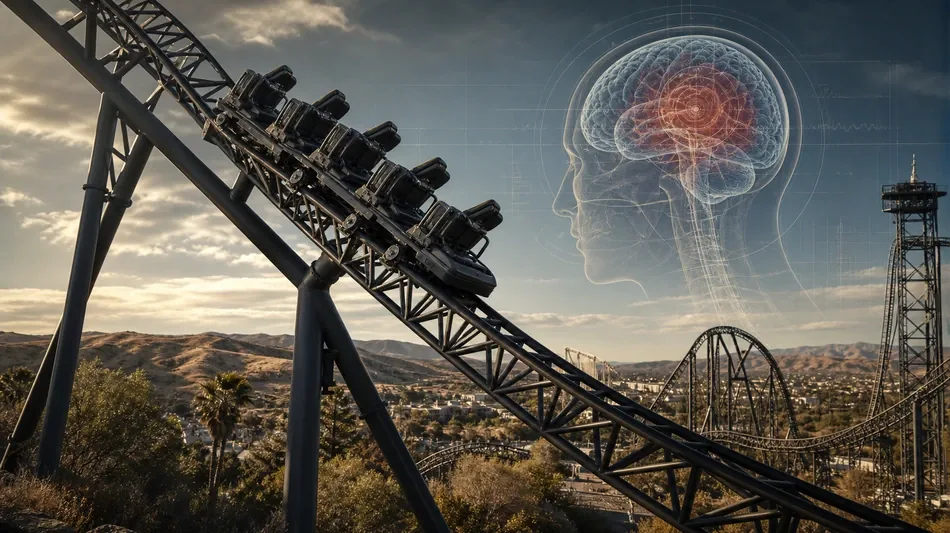
X2 reaches 76mph, or 120km/h, and descends 215ft, or 65 metres. Its seats rotate independently while its carriages perform inverted turns, adding forces that can rapidly accelerate and deform the brain. Only two other rollercoasters, in China and Japan, use a similar design.
Rollercoaster injuries remain uncommon overall. Research has found that normal rides usually produce brain strain below that of mild football headers, and hospitalisation rates are low. A 2005 study recorded 39 US rollercoaster-associated deaths from 1994 to 2004, including 15 involving brain bleeding or cardiac problems. Another study estimated that 4,423 US children a year visited emergency departments for amusement-ride injuries from 1990 to 2010, most involving relatively minor head or neck trauma.
Professor Lyndia Wu of the University of British Columbia said head injury should not be an expected risk and rides could be designed to prevent it. Researchers said unusually forceful attractions such as X2 warranted further investigation.
W.Miller--PI