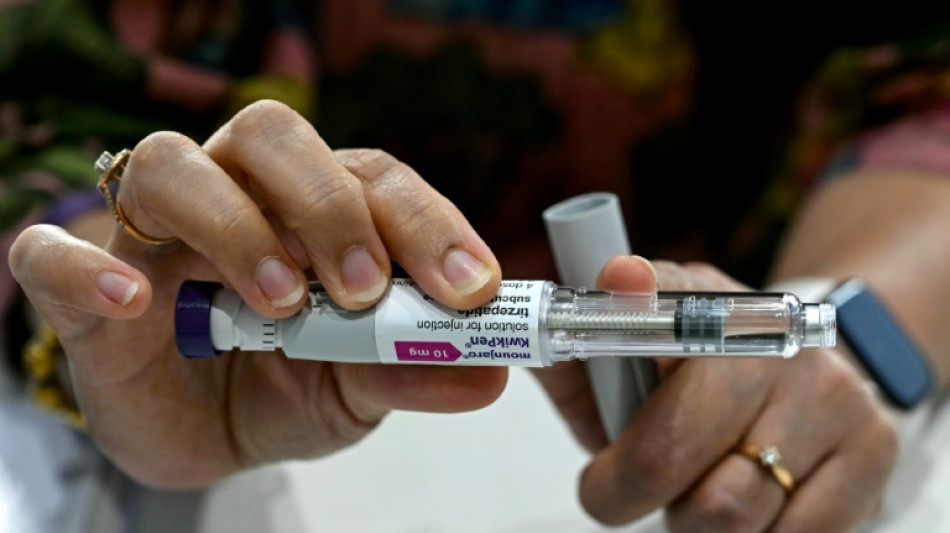
India to tackle global obesity with cheap fat-loss jabs / Photo: Indranil MUKHERJEE - AFP

A deluge of weight‑loss drugs is set to transform the global fight against obesity as India prepares to unleash low‑cost generic versions of injections like Ozempic after a key patent expired Friday.
The move will dramatically widen access to treatments that have long been considered a luxury, especially in middle-income countries, where soaring demand has collided with steep prices.
At clinics across Mumbai, doctors say they are already preparing for an influx in new patients.
More than 50 people walk into endocrinologist Nadeem Rais's office every week seeking weight-loss injections.
"We have around 70 to 80 patients on active treatment right now," he told AFP.
"When generics come out and prices drop, that could go up to 200 easily."
His colleague Sunera Ghai agrees saying that demand is "very high" but many "probably aren't taking it just because it is truly a luxury item at this point".
The breakthrough comes as patents on semaglutide the active ingredient in drugs such as Ozempic and Wegovy expired Friday in India, the world's largest supplier of generic medicines.
By the end of 2026, core patents on semaglutide will have expired in 10 countries that represent 48 percent of the global obesity burden, according to a study published earlier this month by researchers.
These include Brazil, China, South Africa, Turkey and Canada, the study said.
- Launching soon -
For India's drug giants, this marks the start of an aggressive new race.
At least four major firms have already prepared generic semaglutide injections, regulatory filings and compliance documents viewed by AFP show.
Some, including Zydus Lifesciences, have announced "Day 1" launches, suggesting generic versions may become available as soon as this weekend in India.
Research firm Pharmarack estimates the Indian market will soon be flooded with options.
"What we understand is, there will be more than 50 brands that will be launched in the market and there are more than 40 players who will be launching these drugs," Pharmarack's vice president Sheetal Sapale said.
The timing aligns with India's shifting health landscape.
While the country still accounts for a third of the world's undernutrition according to the World Health Organization (WHO), rising incomes and urban lifestyles have pushed obesity rates sharply upward.
Government data released March last year shows 24 percent of women and 23 percent of men are overweight or obese in India.
"Once a person starts earning money, he becomes more sedentary here," says bariatric surgeon Sanjay Borude.
"While in first-world countries, the more the money, they become more active and devote time for their health, this is reversed in India."
These flipped economics have worked well for big pharma players like Eli Lilly and Novo Nordisk who have been cashing in on the market.
India's weight‑loss drug sales have grown tenfold in five years to $153 million as of 2026, and are projected to soar to over half a billion by 2030.
But using such drugs can cause side effects including nausea and gastrointestinal issues.
- Breaking price barrier -
Eli Lilly's Mounjaro became the country's top‑selling drug by value last year, surpassing even common antibiotics.
Still, high prices -- often 15,000 to 22,000 rupees ($161–$236) a month -- limit access, says Swati Pradhan, who runs a weight-loss clinic in Mumbai.
She expects patient numbers to rise once generics push treatment costs closer to 5,000 rupees ($60) a month.
The global impact may prove even more profound.
India supplies more than half of Africa's generic medicines, and cheaper semaglutide could become a lifeline for countries where obesity is rising rapidly but treatment remains unaffordable.
"Lower‑cost semaglutide could significantly expand access to effective treatment particularly in middle-income countries where price has been a major barrier," Simon Barquera, president of the World Obesity Federation, told AFP.
"Generic products are an important step in breaking the access barrier, now that the scientific one has been overcome."
Indian firms will be a key driving force, with Dr Reddy's Laboratories aiming to launch its version of semaglutide in Canada by May 2026.
For patients like 46‑year‑old Sukant Mangal, who lost nearly 30 pounds in eight months, wider access could not come soon enough.
Many he knows simply abandoned treatment mid‑way when they realised they would have to spend 20,000 rupees ($214) a month for seven to eight months.
"Had it been cheaper, (it) would've been much easier to have it."
L.Martinez--PI