French court's 'cold case' ruling casts doubt on other investigations / Photo: Bertrand GUAY - AFP

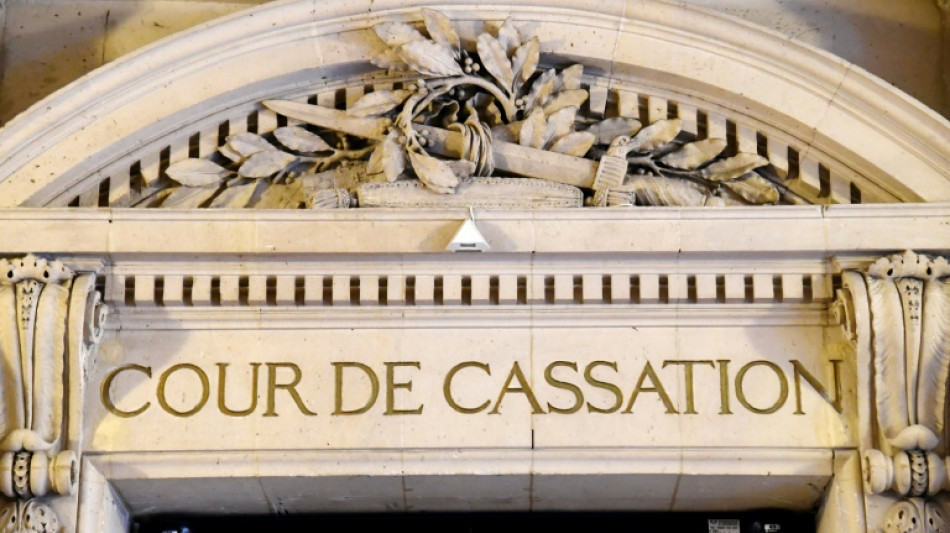
France's top court ruled Friday it was too late to try a man who confessed to a murder decades after his victim disappeared, a judgment that could affect other "cold case" investigations.
The Court of Cassation ruled that Yves Chatain, who in 2022 confessed to the 1986 murder of 25-year-old Marie-Therese Bonfanti, could not be tried because too much time had passed.
The court rejected the argument of France's top prosecutor Remy Heitz for a more flexible view of the statute of limitations.
Addressing the court last November, he had warned that if the court did not do so, it would jeopardise similar "cold cases" under investigation.
Of 22 cases being investigated by a unit specialising in unsolved historic cases, said Heitz, seven could be affected if the court confirmed the ruling on the statute of limitations in the Bonfanti case.
Marie-Therese Bonfanti disappeared in May 1986 in the Isere region in eastern France. Her partial remains were only discovered after Chatain, long a suspect in the case, finally confessed to having strangled her.
Friday's ruling however, closed the door on any possibility of prosecuting Chatain.
The victim's husband Thierry Bonfanti denounced the ruling outside the courtroom.
"This is a terrible day for us," he said, tears in his eyes.
"It's incredible to hear this from a justice system of which we are the victims," he added.
"I don't know how it's going to work in future for the 'cold case' unit, but if it's to get results like this one, I wish them the best of luck," said Bonfanti, surrounded by other members of the family.
Catherine Bauer-Violas, lawyer for the Bonfanti family, also said that the ruling could hit the work of the "cold case" unit, based in Nanterre, on the outskirts of Paris.
"A certain number of cases... will not be able to be pursued," she argued.
The family was considering whether to take the case to the European Court of Human Rights, she added.
K.Thompson--PI